
Product Direction
Choose the product categories, style direction, intended customer and collection scope.
Learn how to plan a private label jewelry collection, from product direction and materials to logo details, custom packaging, samples, production and delivery preparation.
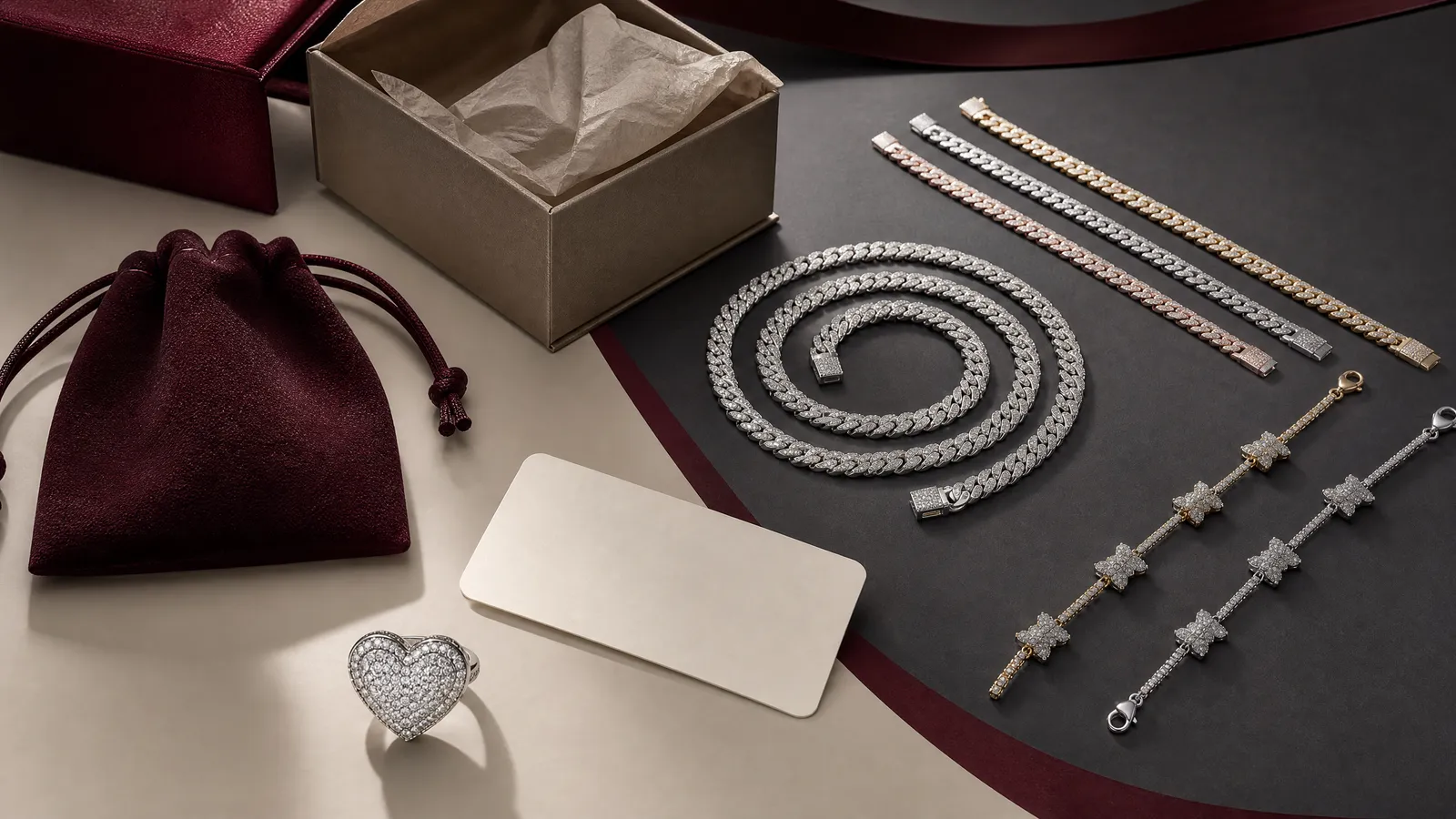
Private label jewelry is a product collection developed or manufactured for sale under your own brand name. Depending on the project, private label support can include product selection or development, logo details, engraving, jewelry cards, pouches, boxes, labels, care cards and retail-ready packaging. The scope of a private label project depends on whether you begin with an existing product direction, a custom design, a reference sample or a new collection concept.
Choose the product categories, style direction, intended customer and collection scope.
Plan logo placement, engraving, initials, symbols, product cards, labels and other visual identifiers.
Coordinate jewelry cards, pouches, boxes, tags, labels, inserts and care cards for the intended retail presentation.
Review a physical sample to confirm product appearance, branding details and packaging before mass production.
Private label does not always mean every product must be developed from zero. The right approach depends on your collection strategy, design requirements, quantity and branding scope.
These terms are often used together, but they describe different parts of a custom jewelry project.
A project can combine these approaches. For example, a buyer may use ODM support to develop a product, OEM manufacturing for approved production and private label packaging for retail presentation.
Before selecting products or packaging, define the direction of your brand and collection. This helps guide material, finish, product category, price position, branding and packaging decisions.
Define who the collection is for, including customer style, price expectations, intended use and shopping occasion.
Consider whether the collection is minimalist, fashion-led, personalized, gifting-focused, men’s, trend-driven, everyday or statement-oriented.
Choose whether to begin with a small focused range, a hero product, coordinated sets or multiple product categories.
Define preferred shapes, colors, gold-tone or silver-tone direction, surface texture, stones and packaging style.
Consider destination market expectations, labeling, product claims, testing requirements and packaging needs.
Estimate initial order quantity and possible reorder needs so suitable product and packaging planning can be reviewed.
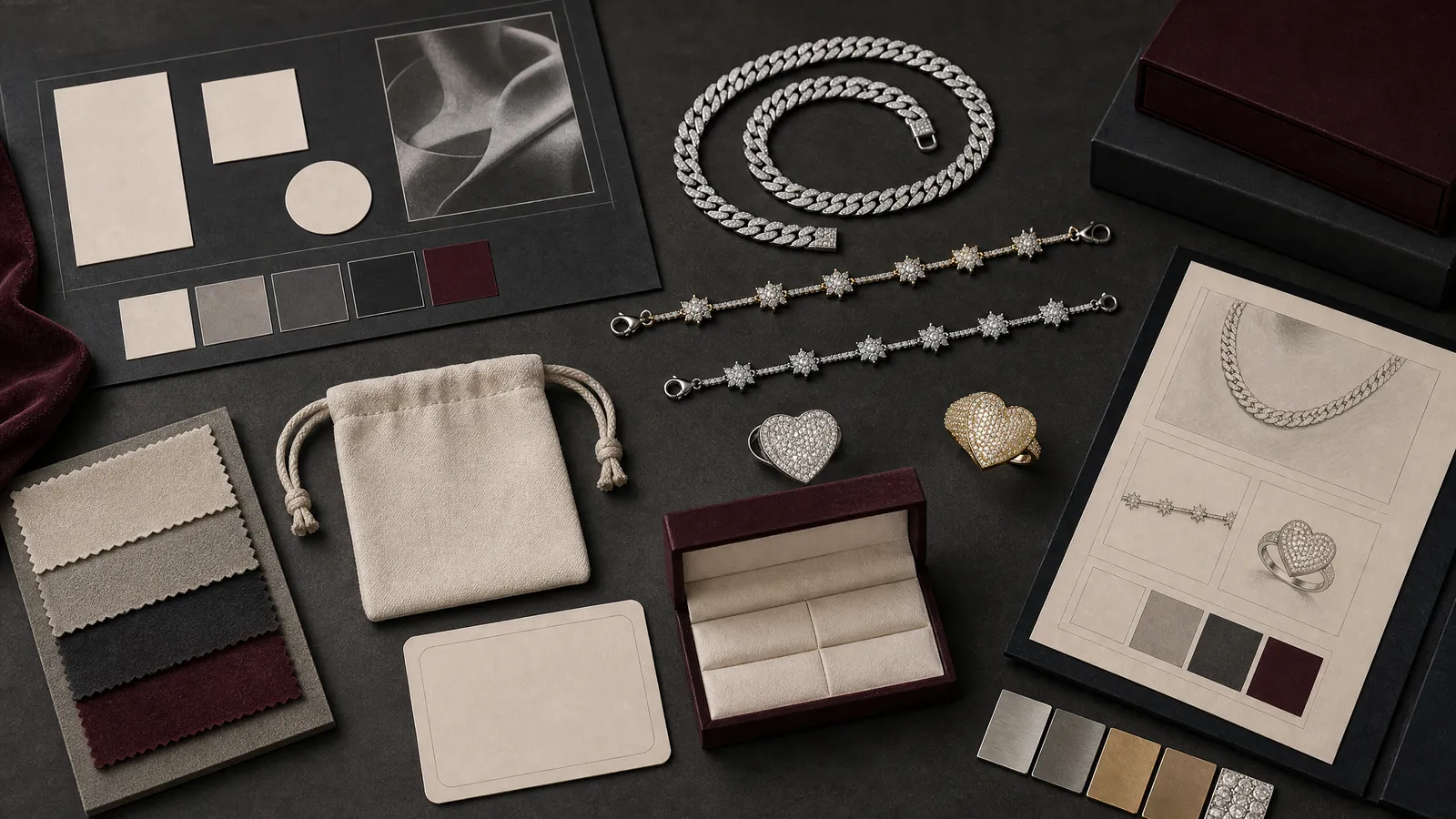
A clear brand direction does not require a full brand book. A mood board, reference images, product examples and a short written brief can provide a practical starting point.
The product categories, materials and finishes you choose affect the collection appearance, product-development process, MOQ direction, sample scope, packaging and intended positioning.
No material or finish automatically guarantees waterproof, tarnish-free, scratch-proof or hypoallergenic performance for every product and user.
Branding details should be planned together with the product design. The suitable logo method, placement and size depend on the product surface, material, finish, dimensions and production method.
Suitable product surfaces may support logos on pendants, charms, rings, clasps, tags and selected components.
Review logos, initials, names, dates, coordinates, symbols and other suitable engraving details.
Use custom cards to display product information, brand identity, care guidance and retail presentation.
Coordinate suitable product tags, labels, barcodes, stickers and other buyer-required identifiers.
Prepare product care information based on selected material, finish, intended use and brand communication requirements.
Use consistent logo placement, product finish, card design, packaging and labeling across the collection where appropriate.
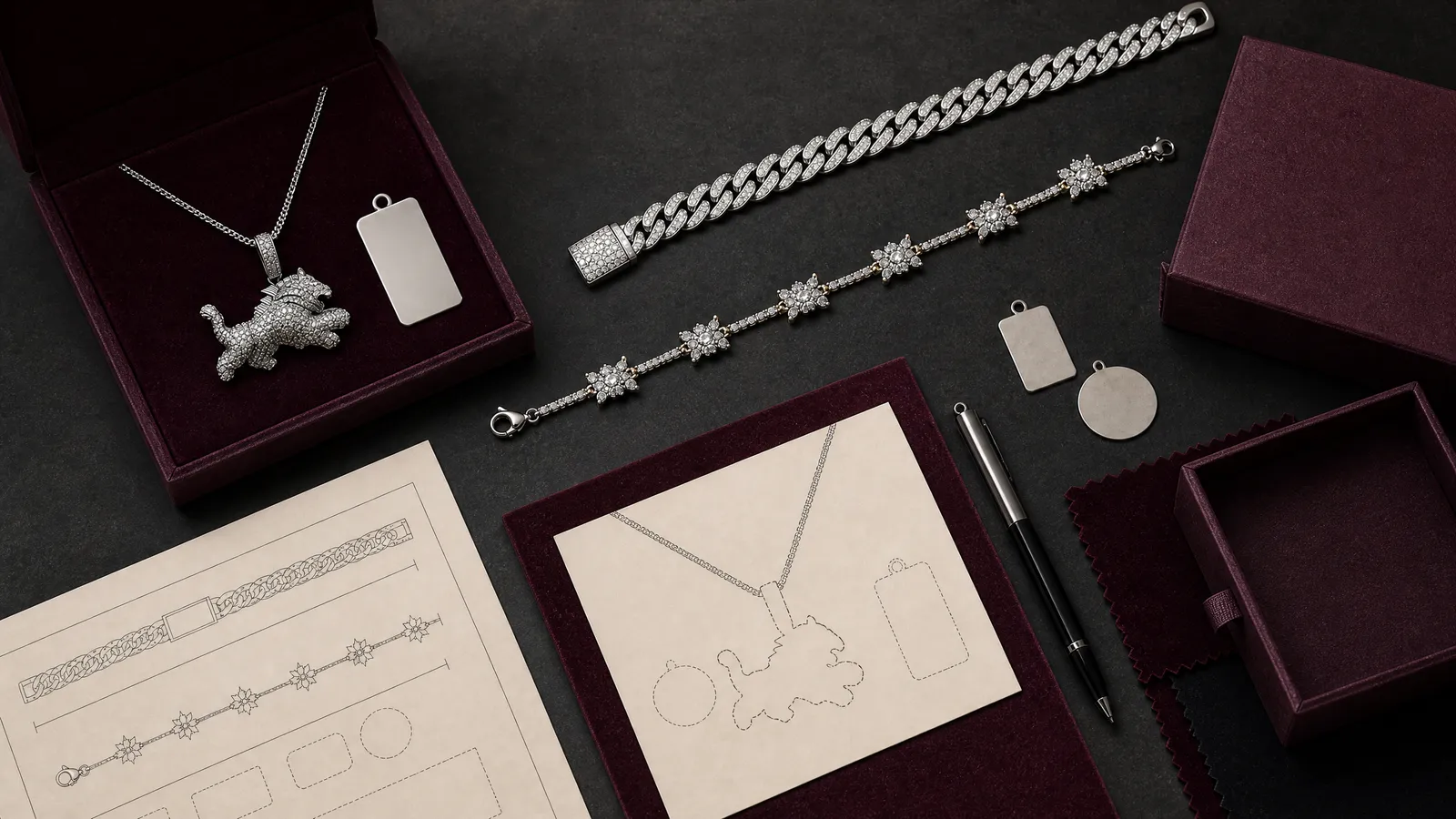
Branding feasibility should be confirmed through product and packaging samples before bulk production.
Packaging is part of the private label product experience. It should be planned alongside product dimensions, collection style, order quantity, shipping requirements and intended retail presentation.
Display necklaces, earrings, bracelets or other products with printed brand details and product presentation.
Use suitable pouch materials and branding directions for gifting, storage, product protection or retail presentation.
Review rigid boxes, paper boxes or other suitable packaging directions based on product size, collection position and presentation needs.
Provide care guidance related to selected material, finish, intended use and brand communication.
Add brand labels, hang tags, barcodes, stickers, product information or other buyer-required details.
Consider inner protection, product grouping, carton packing, labels and delivery requirements before bulk production.
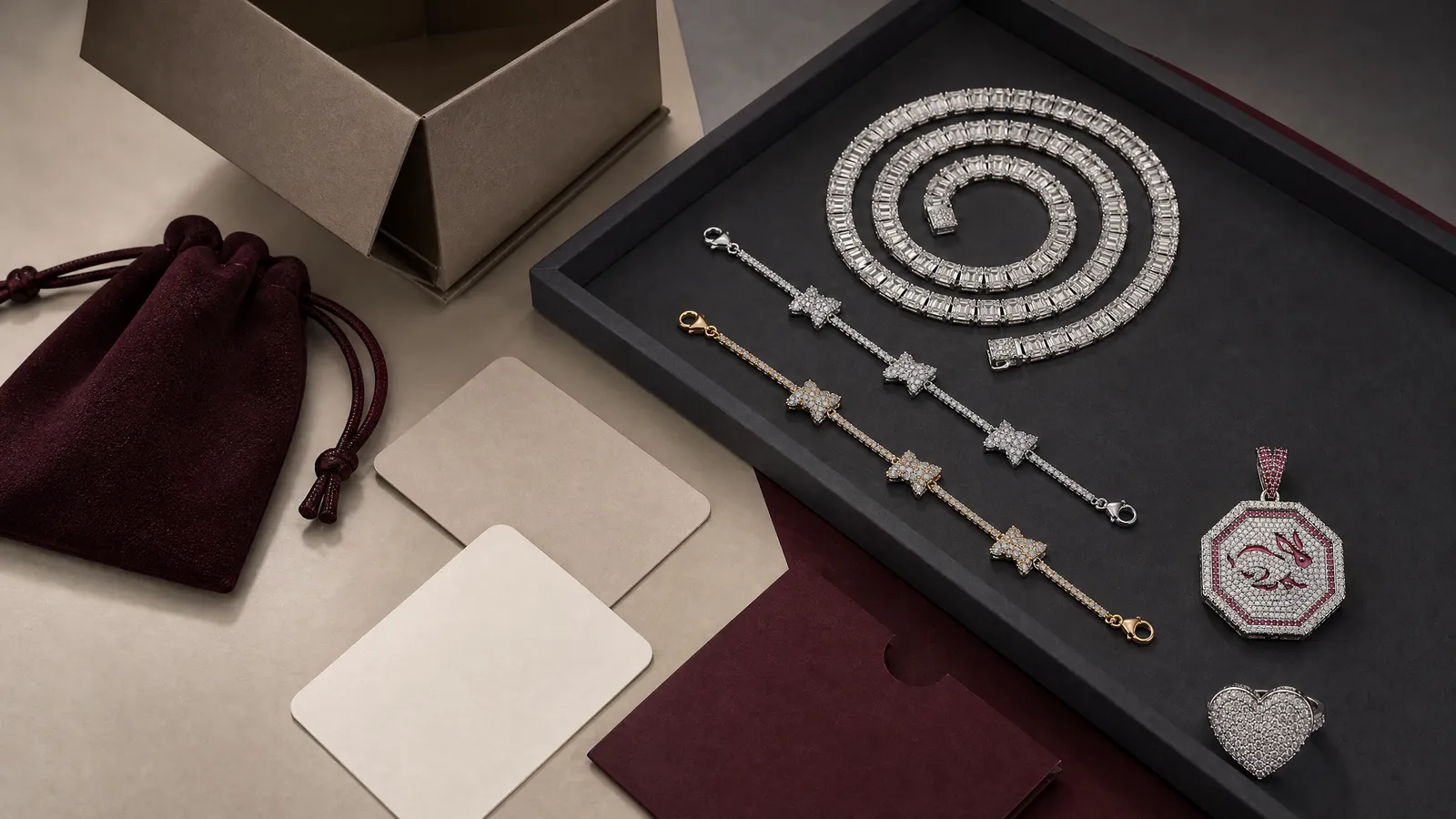
Samples help confirm both the jewelry product and the private label presentation before bulk production.
Review shape, dimensions, material, finish, chain, clasp, stones, assembly and product appearance.
Review logo placement, engraving, product card artwork, label details and other visible brand elements.
Review card size, pouch or box fit, print appearance, care card, labels, inserts and product presentation.
Review whether the selected materials, finishes, branding and packaging work together across the collection.
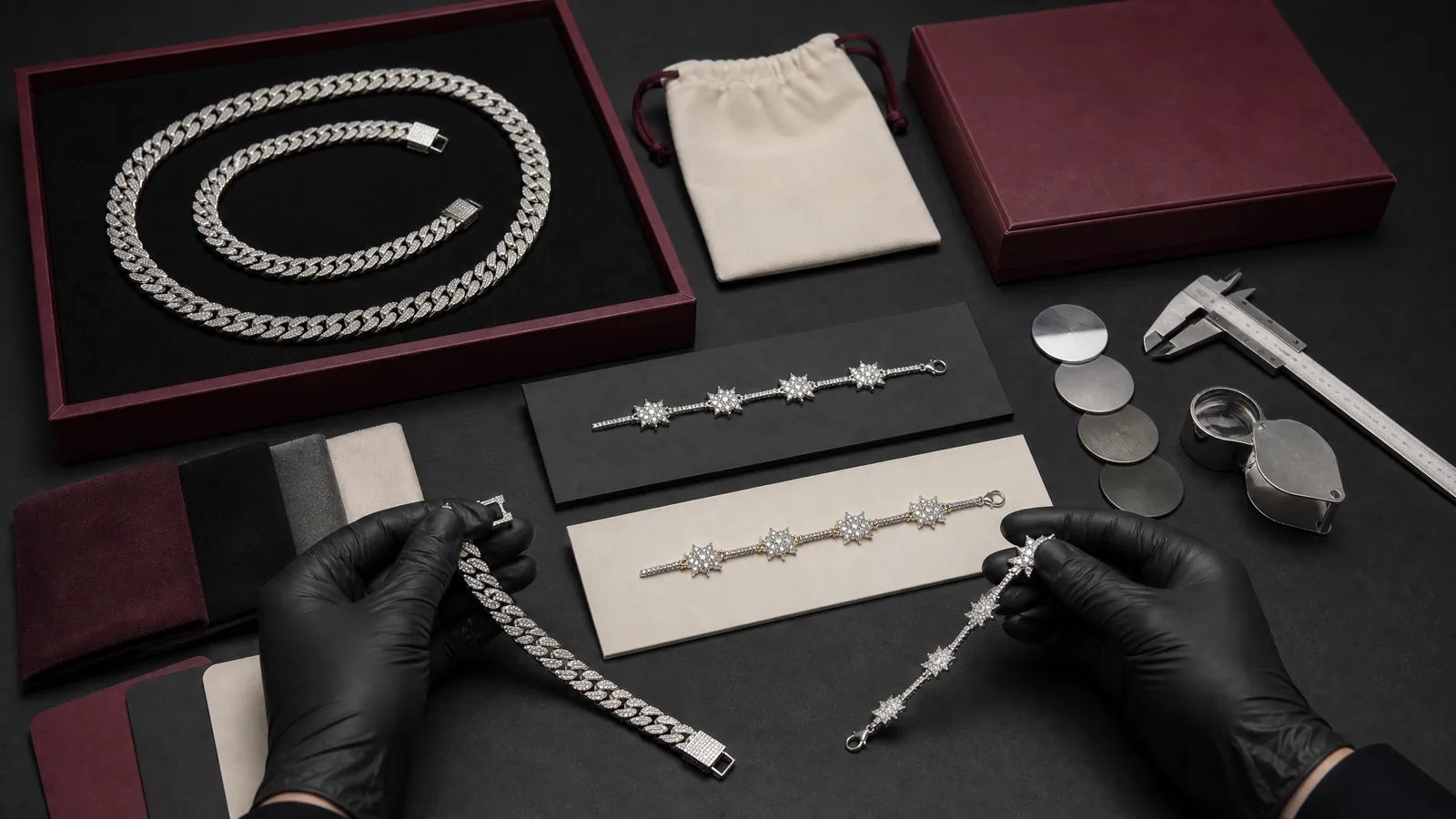
Changes after sample review may affect tooling, materials, finish, packaging, quantity planning, MOQ direction and production timing.
After the product and branding samples are approved, confirm the order quantity, product variations, packaging requirements and production plan.
MOQ starts from 50 pieces.
Jewelry cards, pouches, boxes, tags, labels and inserts may have separate quantity requirements based on materials, printing and production method.
Different styles, sizes, colors, finishes, stones, engraving options and packaging versions may affect order planning.
Confirm product dimensions, materials, finish, branding, packaging, care-card content, labels and quality requirements before production.
Sampling takes 12-15 days after the sample scope is confirmed. Production takes 20-35 days after approved samples and final specifications are confirmed.
Confirm destination, shipping requirements, carton marks, product grouping and final packing needs.
A project-specific MOQ and production estimate can be provided after reviewing the approved product, packaging scope, quantity and delivery requirements.
Before shipment, quality checks, packaging review and any agreed testing or documentation requirements should be completed according to the approved project requirements.
Review applicable product dimensions, material direction, surface condition, finish appearance, engraving, stones, components and assembly.
Review product cards, pouches, boxes, labels, inserts, care cards, quantity, product grouping and final packing condition.
Buyer-specific inspection standards, approved samples, specifications and acceptance criteria can be reviewed before production.
Nickel-related, lead-related, cadmium-related, REACH-related or other destination-market requirements can be discussed on a project-specific basis.
Claims related to water resistance, tarnish resistance, finish durability or sensitive-skin suitability should be reviewed for the specific product and target market.
Confirm export packing, product grouping, labels, carton marks, destination and delivery method before shipment.
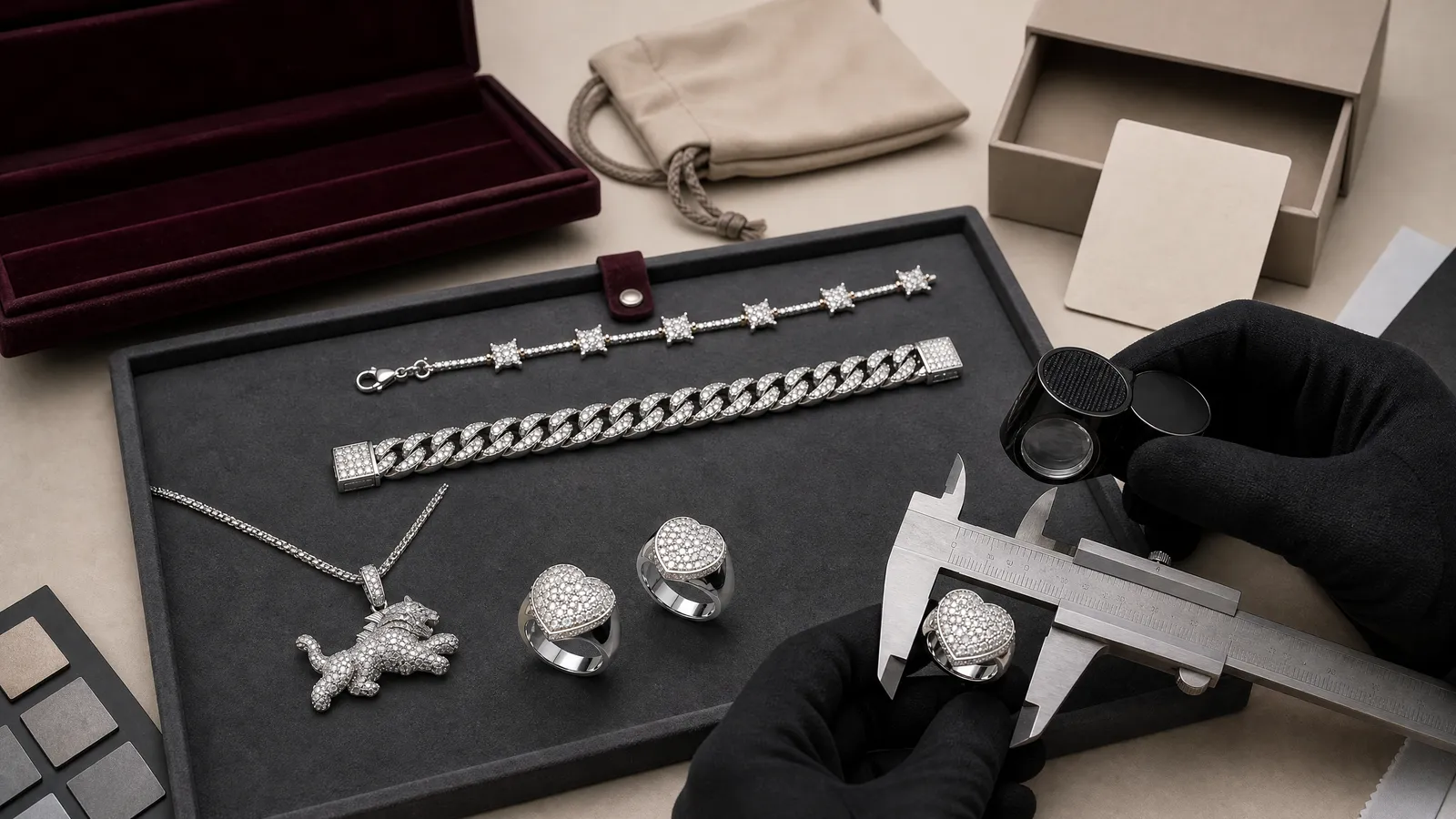
Testing scope, documentation and product claims should be confirmed according to the specific product, materials, finish, destination market and buyer requirements.
Use this checklist to prepare for an initial private label jewelry project review.
Brand name Target customer Collection direction Target market Target price position Core product categories
CAD file, sketch, reference image or sample Product dimensions Material preference Finish or color direction Chain, clasp or component requirements Stone and decorative details
Logo file Logo placement Engraving text or symbols Jewelry-card artwork Label, tag or barcode requirements Care-card content
Pouch, box or card preference Packaging artwork Product fit requirements Insert or thank-you card requirements Shipping protection requirements
Estimated quantity Number of styles, colors or sizes Sample requirements Testing or compliance requirements Target delivery date Destination country Shipping requirements
Define your target customer, collection style, product position and visual direction before selecting products and packaging.
Packaging may require artwork, samples, separate quantity planning and lead time. Plan it alongside the jewelry product.
Logo visibility, size and method depend on product surface, material, finish and product dimensions.
Samples help verify jewelry details, finish, branding, packaging fit and final retail presentation before mass production.
Many product styles, colors, finishes, sizes and packaging versions can complicate MOQ and production planning. Start with a focused collection where appropriate.
Claims such as waterproof, tarnish-free, hypoallergenic or permanent finish should be reviewed based on the specific product, materials, testing and target market.
Buyer Questions
Practical answers for planning this project.
Private label jewelry is jewelry developed or manufactured for sale under your own brand name. The project may include custom products, branding, logo details, engraving, jewelry cards, packaging, labels and care materials.
Private label focuses on selling jewelry under your brand. OEM refers to manufacturing according to buyer-approved specifications. ODM involves development support based on a buyer’s idea, reference or product direction. A project can combine these approaches.
Yes. A product idea, mood board, reference image, sample or collection direction can be used as a starting point. Further product development may be needed depending on the project.
Private label collection development can be discussed based on product categories, materials, finishes, branding, packaging, quantity and target market requirements.
Suitable product surfaces may support logo marking, engraving, initials, symbols and other branding details. Final method and placement depend on product material, finish, dimensions and design.
Yes. Names, initials, dates, coordinates, messages and symbols can be reviewed for suitable product surfaces and dimensions.
Yes. Branded jewelry cards can be discussed with suitable artwork, size, material, print direction and product fit requirements.
Custom pouches, boxes and other packaging options can be discussed based on the product category, collection direction, branding, quantity and shipping requirements.
Care cards, thank-you cards, inserts and other branded printed materials can be discussed as part of suitable private label packaging projects.
Private label collections can be reviewed for necklaces, pendants, chains, earrings, bracelets, rings, personalized jewelry, charms and jewelry sets depending on product and manufacturing requirements.
Suitable options may include stainless steel, brass and other materials depending on the product type, finish direction, target market and manufacturing requirements.
Available finish directions may include silver-tone, gold-tone, rose gold-tone, black, polished, brushed, matte and other suitable options depending on the product and base material.
Material and finish options can be reviewed for products positioned for daily wear, water resistance or tarnish resistance. Final product claims should be confirmed according to the design, materials, construction, use conditions, care and testing requirements.
Yes. Samples are recommended to review product shape, dimensions, material appearance, finish, branding, packaging, stone details and product presentation before mass production.
Yes. Changes can be discussed after reviewing samples. Revisions may affect material, tooling, finish, packaging, MOQ direction and production timing.
MOQ starts from 50 pieces.
MOQ starts from 50 pieces.
Private label jewelry sampling takes 12-15 days after the sample scope is confirmed.
Private label jewelry production takes 20-35 days after approved samples and final specifications are confirmed.
Quality checks can be discussed according to approved samples, product specifications, branding details, packaging requirements and buyer-defined inspection standards.
Testing and compliance requirements can be discussed based on product materials, finishes, destination market and buyer specifications. Product-specific testing should be confirmed for each project.
Private label projects can include product branding, jewelry cards, pouches, boxes, labels, inserts, care cards and other retail-ready packaging components.
Yes. Export preparation and international shipment coordination can be discussed according to destination, quantity, packaging and delivery requirements.
Please provide your product category, design or reference image, brand direction, material preference, finish direction, estimated quantity, logo details, packaging requirements, target market and target delivery date.
Submit your product idea, brand direction, design reference or sample through the quote form. Include your material, finish, quantity, branding and packaging requirements for an initial project review.
Project Planning
Share your brand direction, product idea, reference images or design files. Include your preferred material, finish, estimated quantity, logo requirements and packaging needs for an initial private label project review.
Buyer Qualification
We serve B2B jewelry buyers only. MOQ starts at 50 pcs per style, and retail or single-piece orders are not supported.
Samples and bulk orders are reviewed separately so development and production can be scoped clearly.