
Product Structure
Shape, thickness, size, weight, joints, components and construction may affect which materials are suitable.
Compare common jewelry material and finish directions for OEM, ODM and private label projects. Learn how material choice affects product appearance, manufacturing, daily-wear positioning, sample development and packaging decisions.
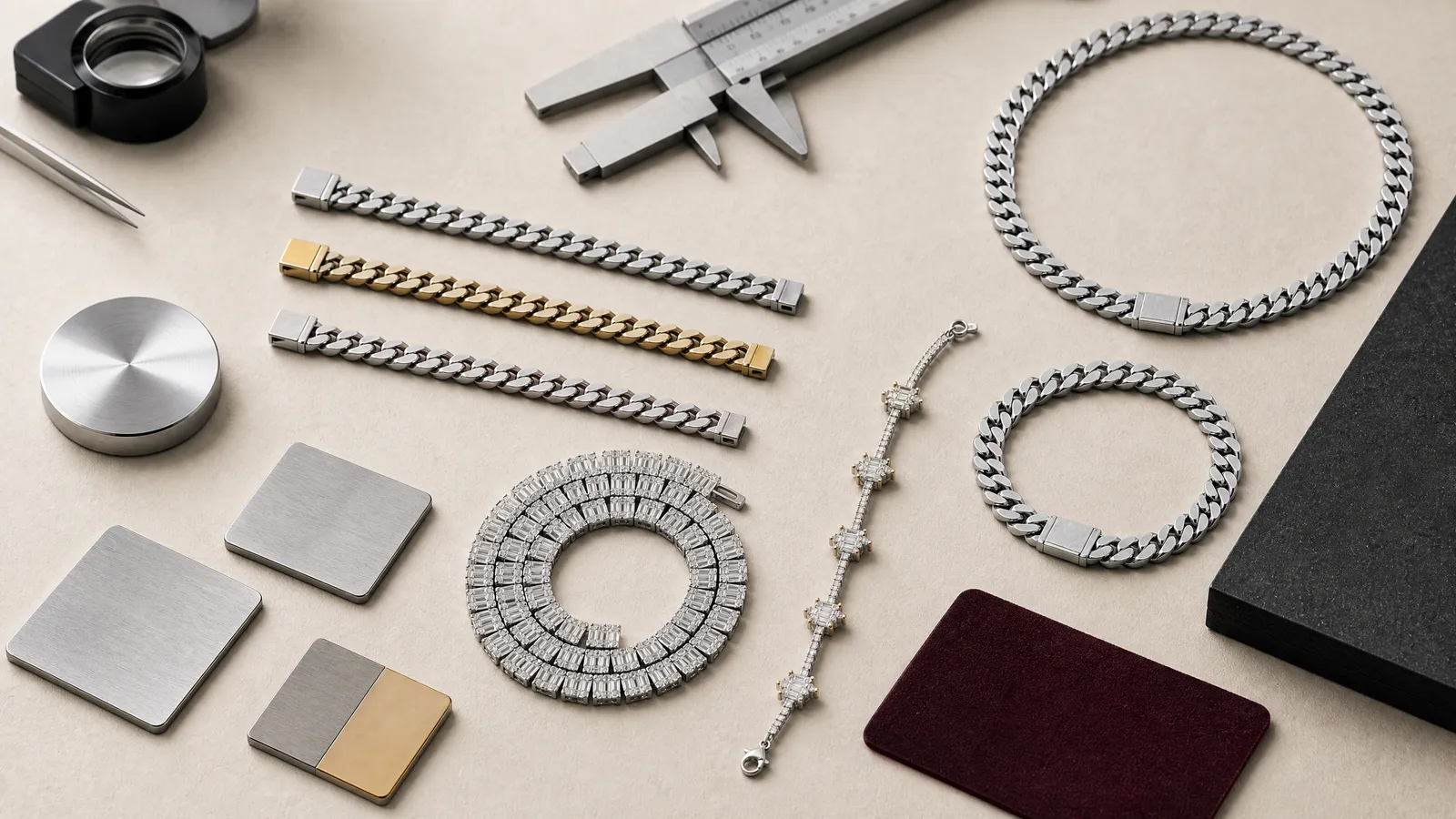
Material selection affects more than the color of a jewelry product. It can influence product structure, weight, surface finish, manufacturing method, sample development, quantity planning, product positioning and care guidance.
Shape, thickness, size, weight, joints, components and construction may affect which materials are suitable.
The base material and surface finish influence color, reflectivity, texture and the final product presentation.
Different materials may require different casting, forming, cutting, polishing, plating, PVD, engraving or assembly considerations.
The selected material should align with customer expectations, price position, intended use and market requirements.
Water exposure, sweat, cosmetics, storage, care and intended use should be considered for daily-wear collections.
Material composition, finish and destination-market requirements may affect testing and documentation needs.
The right material depends on your product category, design detail, desired appearance, intended use, target market, quantity and manufacturing requirements.
Use this table as a starting point. Final material recommendations require product-specific review. No material or finish automatically guarantees waterproof, tarnish-free, scratch-proof or hypoallergenic performance for every product and user.
Stainless steel is commonly considered for many modern and daily-wear jewelry products. Suitable options may include necklaces, pendants, chains, bracelets, earrings, rings and personalized jewelry.
Durable product direction, Modern metallic appearance, Compatibility with selected PVD finishes, Suitable surfaces for engraving, Wide range of product categories, Private label packaging compatibility
Product thickness and structure, Chain and clasp selection, Polishing and surface preparation, PVD or other finish options, Laser engraving area, Stone-setting feasibility, Product-specific testing requirements
Minimalist jewelry, Personalized jewelry, Men’s jewelry, Daily-wear collections, Chain and pendant collections, Gold-tone PVD collections
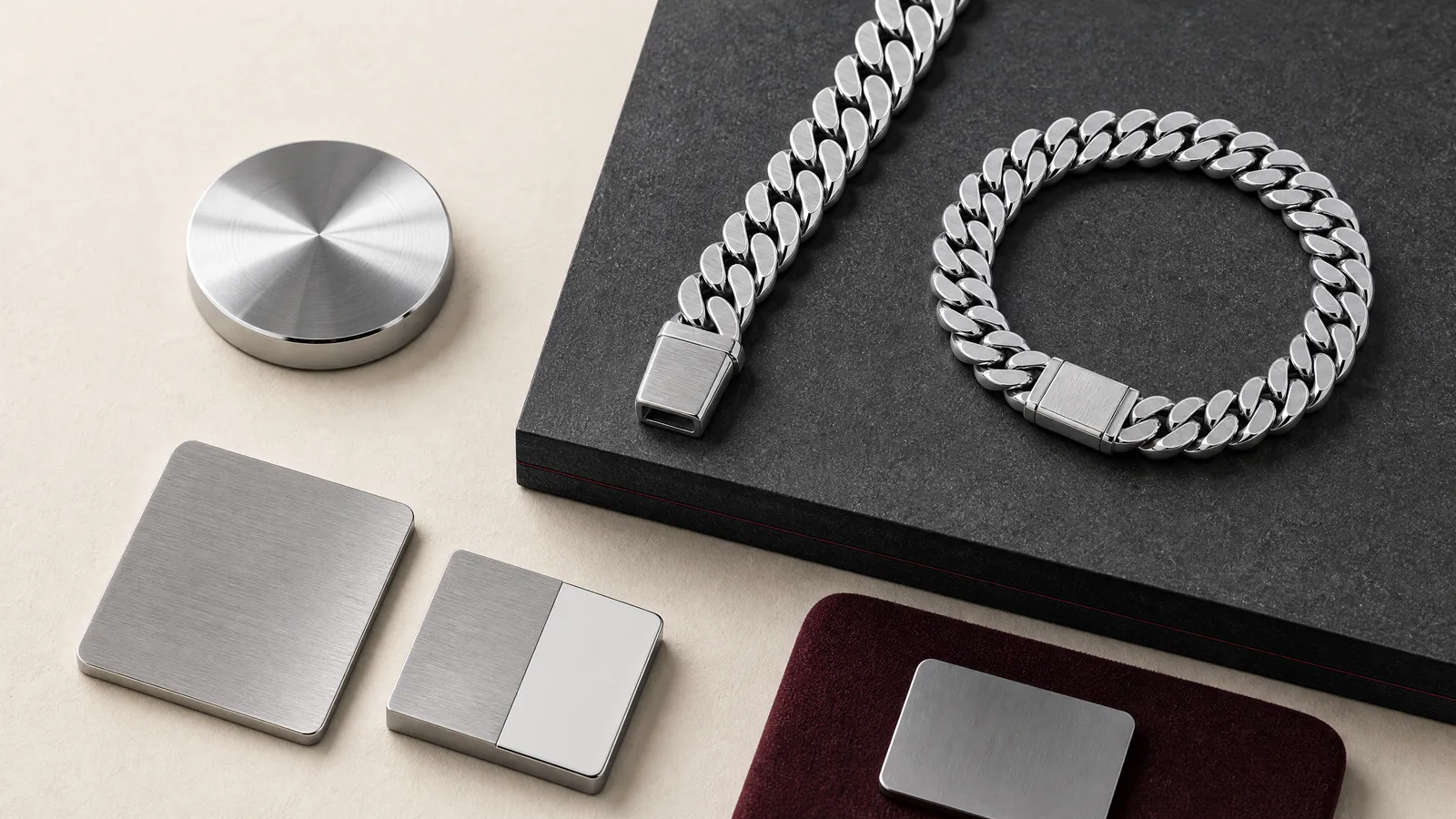
Brass is often considered for detailed, decorative and fashion jewelry designs. It may be suitable for pendants, charms, earrings, rings, statement products and selected plated collections.
Detailed product shapes, Decorative forms and components, Casting and forming possibilities, Multiple plating directions, Suitable for selected statement designs, Compatible with selected engraving and stone details
Casting or forming requirements, Product thickness and structure, Surface preparation, Polishing and plating, Antique or textured finishes, Stone-setting requirements, Care and intended-use guidance
Fashion jewelry, Statement jewelry, Decorative pendants, Charms and accessories, Vintage-inspired collections, Boutique jewelry, Plated jewelry products
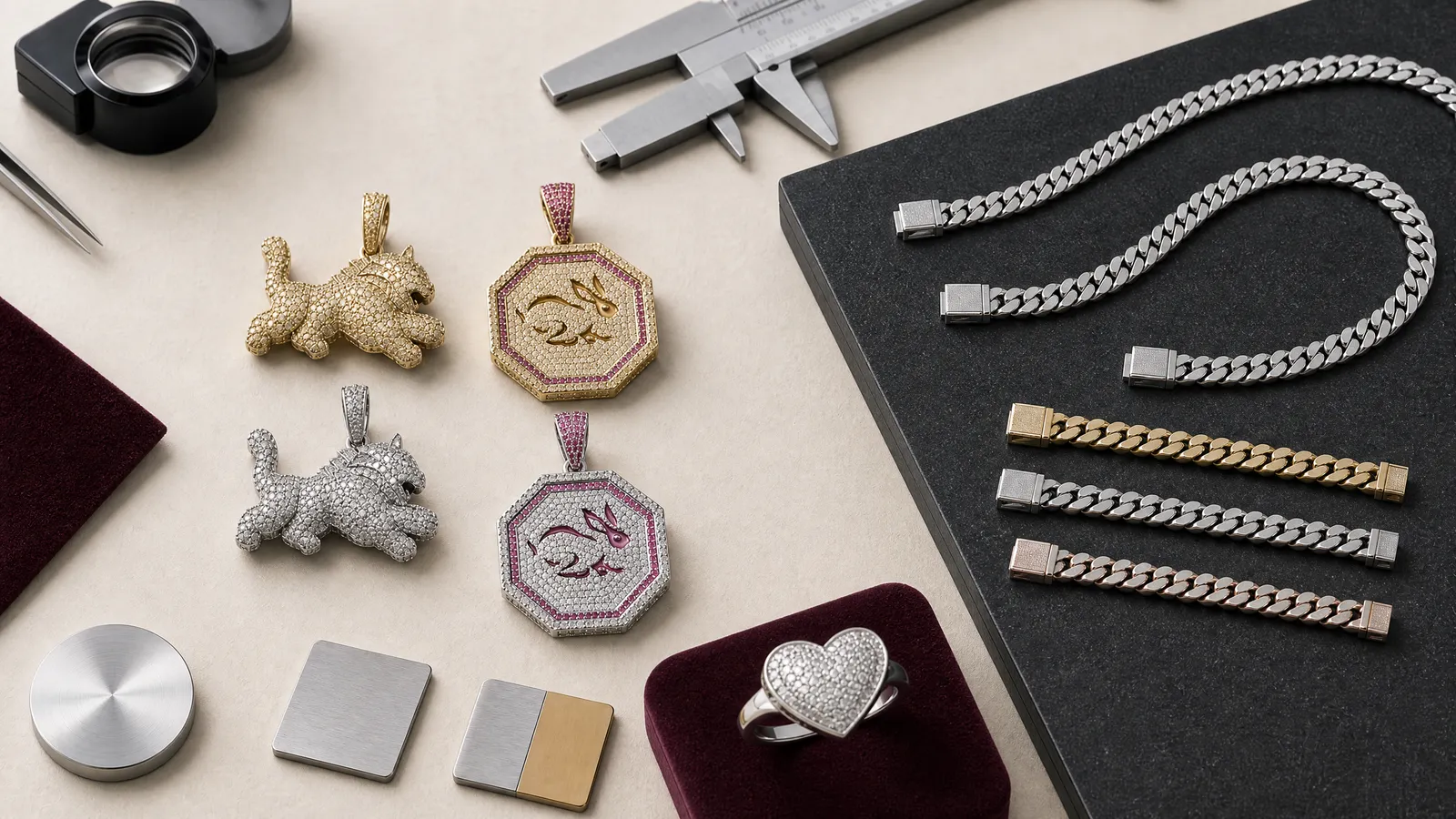
PVD, or physical vapor deposition, is a surface finishing process used on suitable products to create gold-tone, rose gold-tone, black and other available color directions.
Base material, Product structure, Surface preparation, Polishing or pre-finish condition, PVD process, Color direction, Product handling, Usage and care conditions
A gold-color direction for selected stainless steel and compatible jewelry products.
A warm color direction for selected fashion, gifting and feminine jewelry collections.
A darker surface direction for selected modern, unisex, industrial and statement jewelry.
A combination of gold-tone, silver-tone, black, polished or textured areas for selected products.
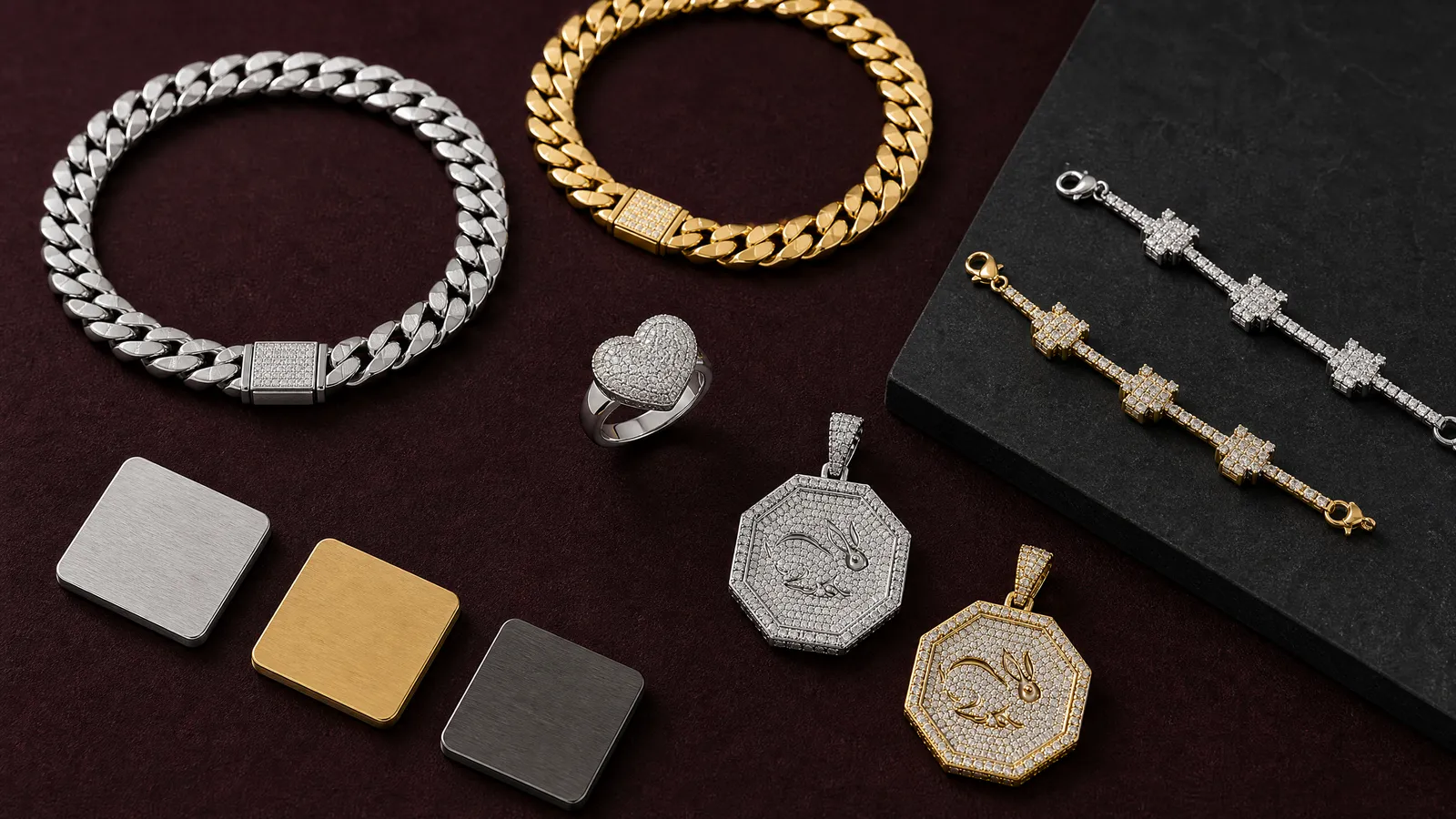
PVD is a surface finish, not a universal guarantee of waterproof, scratch-proof, fade-proof or tarnish-free performance.
Explore PVD Gold Plated Jewelry →Brands often use “waterproof jewelry” to describe products intended for regular wear and improved resistance to water exposure. For product development, the more important task is to review the complete jewelry design and define the intended use and performance requirements.
Base material, Surface finish, Product construction, Chain and clasp, Stone settings, Component assembly, Water and chemical exposure, Care guidance, Destination-market requirements, Product-specific testing
Water-resistant positioning, Daily-wear jewelry, Suitable for selected exposure requirements, Product-specific performance review
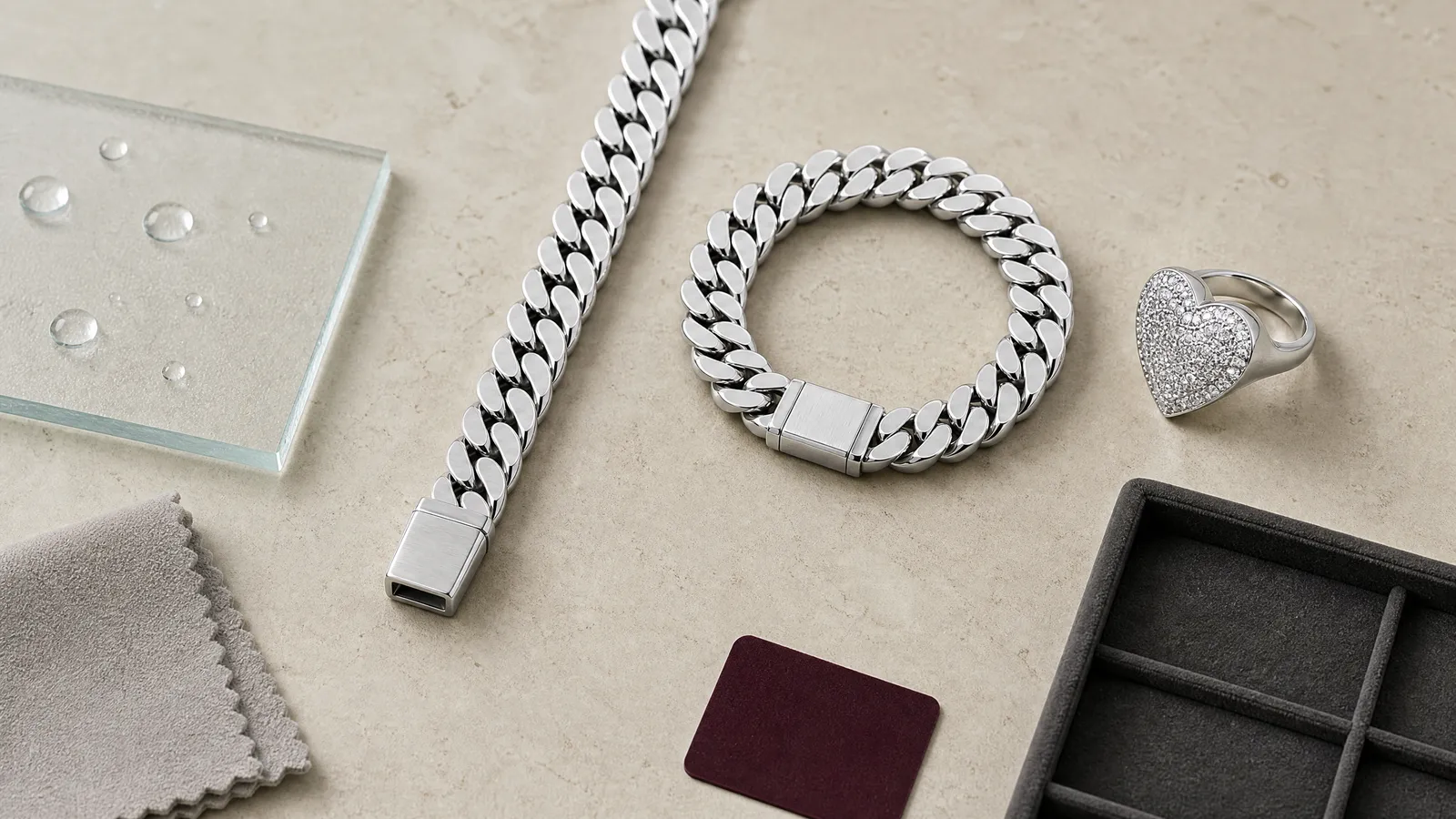
“Tarnish-resistant jewelry” generally refers to jewelry developed with materials and finishes intended to reduce visible discoloration during normal use. Appearance can still be affected by wear, humidity, chemicals, cosmetics, storage, handling and care.
Base material, Surface preparation, Finish or coating, Product construction, Exposure to sweat and moisture, Perfume and cosmetic contact, Storage conditions, Care instructions, Testing or buyer requirements
Explain intended use clearly, Provide suitable care guidance, Avoid permanent-performance wording, Align product claims with available evidence, Confirm destination-market requirements
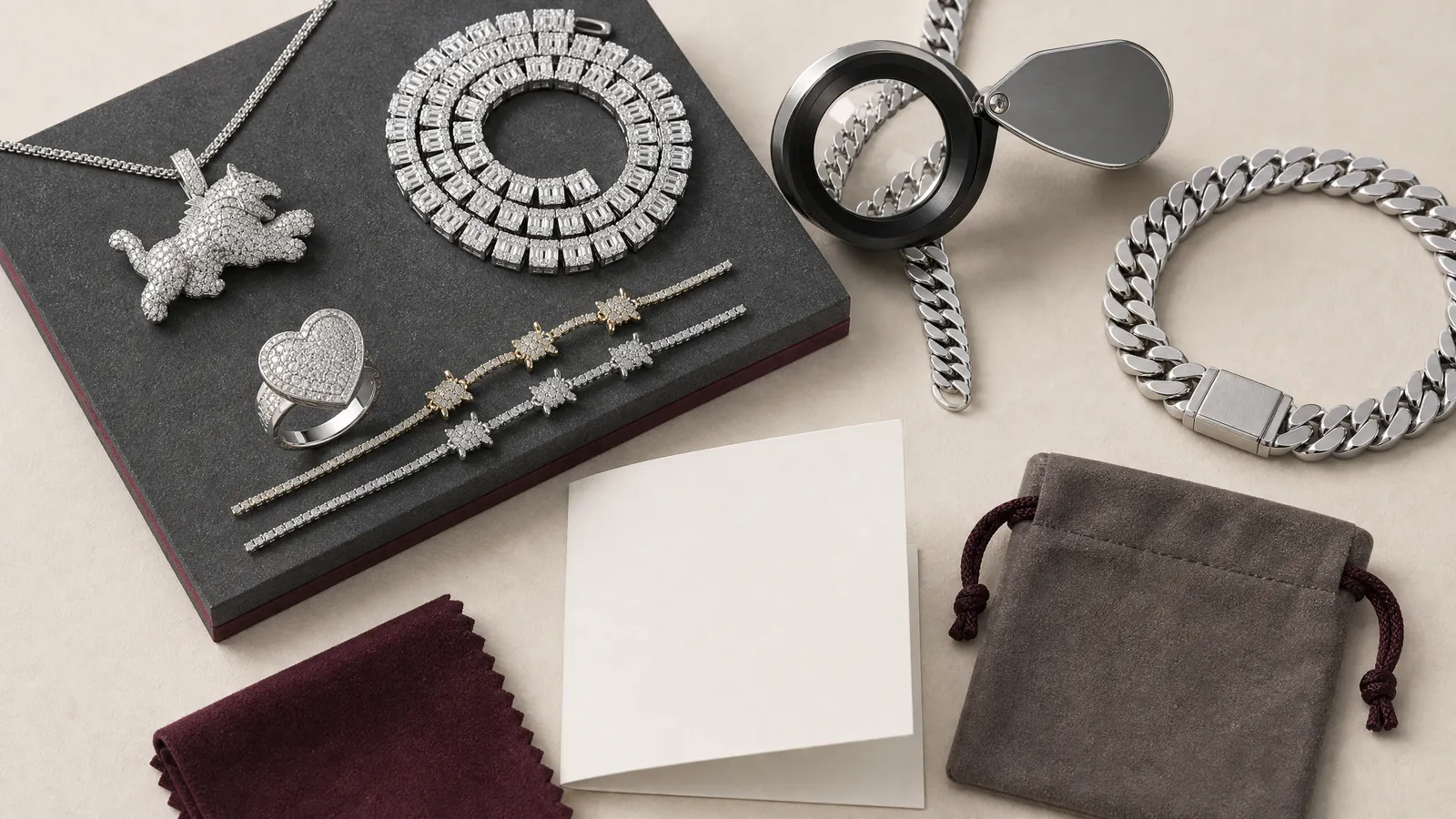
Material selection can affect product development, tooling, surface preparation, finish, assembly, sampling, MOQ and production planning.
Material choice should be reviewed together with product design and intended use rather than selected only by appearance.
Explore Manufacturing Capabilities →The finish should support the product’s visual direction, material, target customer, intended use and manufacturing requirements.
Silver-tone, gold-tone, rose gold-tone, black, antique or another available color direction.
Polished, brushed, matte, textured, engraved, antique or mixed-finish appearance.
Daily wear, gifting, fashion retail, boutique collections, seasonal collections or another product direction.
Material, finish, stones, components, branding and packaging all contribute to the final project requirements.
Logo size, engraving, product surface and packaging should be considered together.
Water-resistance, tarnish-resistance, sensitive-skin, nickel, lead, cadmium, REACH or other market requirements should be stated before development.
Finish Selection Flow: Product Category → Intended Use → Base Material → Surface Finish → Branding and Components → Sample Review → Final Approval
The same material may perform or appear differently across product types. Final suitability depends on the product structure, finish, components, use and project requirements.
When requesting a material recommendation or quote, provide as much of the following information as possible.
Product category, Reference image, sketch, CAD file or sample, Preferred base material, Preferred finish or color, Intended product use, Target market, Product dimensions, Estimated quantity, Logo or engraving requirements, Stone or decorative details, Chain, clasp or component requirements, Packaging requirements, Care-card requirements, Testing or compliance requirements, Target delivery date
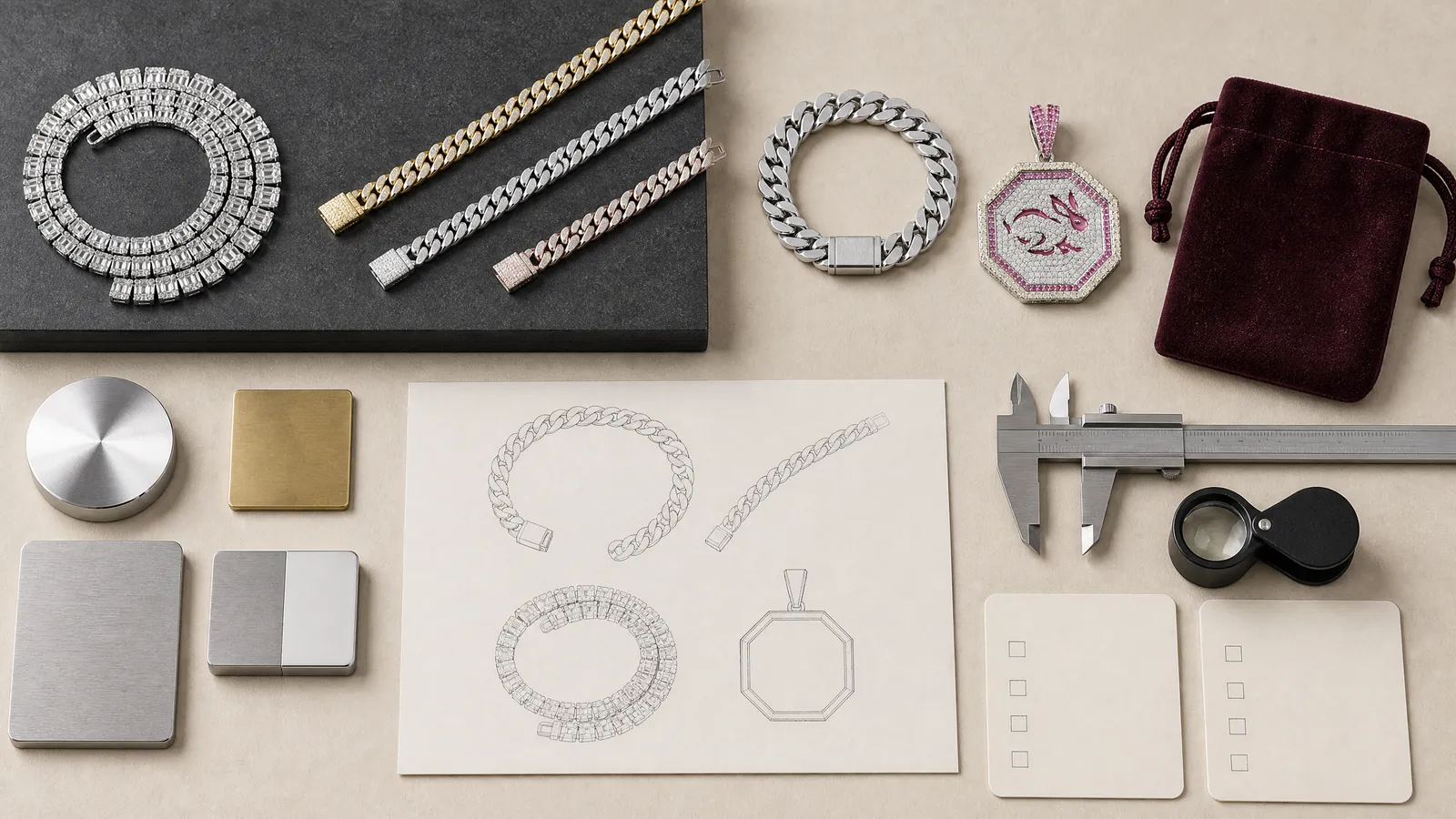
If you are unsure which material or finish to choose, submit your product reference and intended use. The project can begin with a material and feasibility review.
Request a Material RecommendationA gold, silver or black appearance does not by itself determine the most suitable base material or finish process.
Shape, thickness, connections, components and product size can affect material and manufacturing feasibility.
Finish availability and appearance depend on the base material, product surface, geometry and finishing process.
Waterproof, tarnish-free, scratch-proof and hypoallergenic claims should be reviewed for the specific product and target market.
Samples help confirm material appearance, finish, dimensions, branding, components and packaging before bulk production.
Care instructions help communicate intended use, storage and maintenance requirements to end customers.
Buyer Questions
Practical answers for planning this project.
Commonly reviewed options may include stainless steel, brass and other suitable materials depending on product category, design, finish, quantity and target market requirements.
Consider the product category, design structure, intended use, target market, desired appearance, target price position, quantity, branding and testing requirements. Material selection should be reviewed with the complete product design.
Stainless steel is commonly considered for many necklaces, pendants, chains, bracelets, earrings and selected rings. Final suitability depends on the product structure, material specification, finish, components, use and care.
316L stainless steel may be available for suitable jewelry projects. Final material specifications should be confirmed according to product structure, finish, target market and buyer requirements.
Brass is often considered for detailed shapes, decorative jewelry, pendants, charms, earrings, rings and selected plated products. Final suitability depends on the design and manufacturing requirements.
They are different base materials with different composition, appearance, manufacturing considerations and finish requirements. The most suitable option depends on the product design, intended use, target market and project requirements.
PVD, or physical vapor deposition, is a surface finishing process used on suitable jewelry products to create gold-tone, rose gold-tone, black and other available color directions.
No. PVD is a surface finishing process. The base material and product construction remain important when reviewing the suitability and expected appearance of the finished jewelry.
PVD availability depends on the base material, surface condition, product structure and finishing process. Each brass product should be reviewed before confirming a PVD direction.
Available finish directions may include gold-tone, silver-tone, rose gold-tone, black, antique, polished, brushed, matte and other suitable options depending on the base material and product design.
Gold-tone PVD refers to a surface finish that creates a gold-color appearance. The specific coating composition and project specifications should be confirmed with the manufacturer for each product.
Stainless steel jewelry may be suitable for water-resistant or daily-wear positioning, but it should not automatically be described as waterproof. Final performance depends on material, finish, product construction, components, use conditions and care.
PVD jewelry may be considered for daily-wear or water-resistant product positioning. However, PVD alone does not make every product waterproof. The base material, construction, finish, use and care should be reviewed.
Brass jewelry should not automatically be described as waterproof. The base material, plating, construction, exposure conditions, storage and care should be considered before making a product claim.
Tarnish-resistant jewelry is commonly used to describe jewelry developed with materials and finishes intended to reduce visible discoloration during normal use. Actual appearance depends on material, finish, use, storage, chemicals and care.
Stainless steel may be suitable for tarnish-resistant or daily-wear product positioning, but it should not automatically be described as permanently tarnish-free in all conditions.
Brass jewelry can change appearance depending on material condition, plating, surface treatment, humidity, chemicals, handling, storage, wear and care.
PVD is a surface finishing process and may be considered as part of a finish direction for suitable products. It does not automatically eliminate all appearance changes or tarnishing under every condition.
Yes. A collection can combine different materials, finishes, colors, products and packaging options. Compatibility, appearance consistency, quantity planning and production requirements should be reviewed for each design.
Combined-material designs can be discussed for suitable products. Component compatibility, finish, assembly, appearance and intended use should be reviewed during development.
MOQ starts from 50 pieces. The final quantity plan is confirmed after reviewing the product category, design, material, finish, variations and packaging requirements.
Mass-production lead time is normally 20–35 days after sample approval and final specification confirmation. The final schedule is recorded in the quotation or order confirmation.
Not necessarily. You can submit your product reference and intended use first. The material and finish can then be reviewed according to the product design and project requirements.
Material or finish samples can be discussed when comparing product directions. The exact sample scope depends on the product, design, finish requirements, quantity and project plan.
Yes. We can review material, finish, product construction, components, intended use, care guidance and testing requirements for suitable daily-wear product directions.
Material suitability for sensitive skin depends on composition, finish, surface treatment and individual sensitivity. Nickel-related and other compliance requirements should be stated for project-specific review.
Available options and documentation depend on the product, material, finish, destination market and buyer requirements. Specific testing or confirmation may be required.
REACH-related testing and documentation can be discussed according to the product, materials, finish, destination market and buyer specifications. Third-party testing should be confirmed for the specific project.
Care guidance is recommended because water, sweat, perfume, cosmetics, cleaning products, humidity, storage and handling can affect jewelry appearance.
Provide the product category, design or reference image, intended use, preferred appearance, estimated quantity, target market, branding details, packaging needs and any testing or compliance requirements.
Submit your product idea, design file, reference image or physical sample and explain the intended use and visual direction. A material and finish review can be carried out before confirming the project plan.
Project Planning
Send us your product idea, reference image or design file. Include your intended use, preferred appearance, estimated quantity, target market and branding requirements, and we will review suitable material and finish directions for your project.
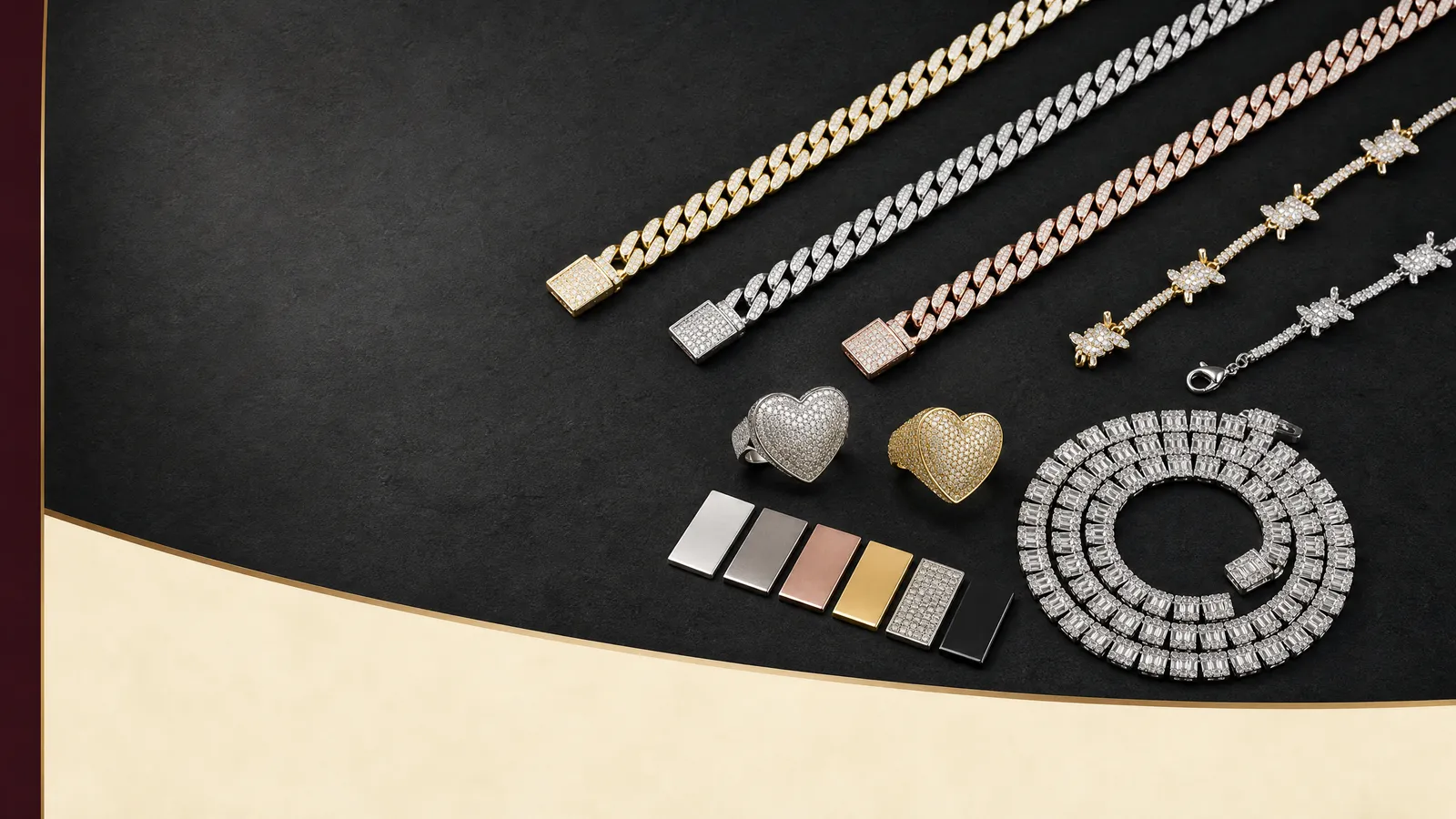
Buyer Qualification
We serve B2B jewelry buyers only. MOQ starts at 50 pcs per style, and retail or single-piece orders are not supported.
Samples and bulk orders are reviewed separately so development and production can be scoped clearly.